
Dynamic Workflows 常見模式指南
3 種自適應執行模式的完整解析

🎯 概述
Dynamic Workflow(動態工作流)允許根據實時結果自動調整執行策略。本文檔詳細分析 3 種最常見的模式、代碼實現和應用場景。
模式 1:Loop-Until-Count
迴圈直到達成目標數量
核心邏輯: 持續執行 Agent,直到產生足夠數量的結果。
const bugs = []
while (bugs.length < 10) {  // 動態條件:目標數量
  const result = await agent("找出代碼中的 bug", {
    schema: BUGS_SCHEMA
  })
  bugs.push(...result.bugs)
  log(`${bugs.length}/10 已發現`)
}
return { confirmed: bugs }
應用場景
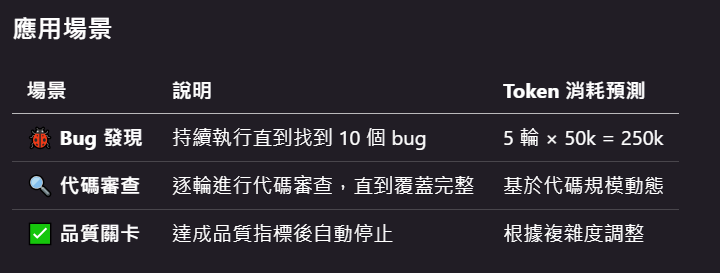
執行流程圖
輪次 1 → 發現 2 個 bug → bugs.length = 2 → 2 < 10 ✓ 繼續
輪次 2 → 發現 3 個 bug → bugs.length = 5 → 5 < 10 ✓ 繼續
輪次 3 → 發現 4 個 bug → bugs.length = 9 → 9 < 10 ✓ 繼續
輪次 4 → 發現 1 個 bug → bugs.length = 10 → 10 < 10 ✗ 停止

總耗時:4 輪 | 總 Token:約 200k
優化建議
設置上限保護: 防止無限迴圈
const bugs = []
const MAX_ROUNDS = 20  // 最多執行 20 輪
let rounds = 0

while (bugs.length < 10 && rounds < MAX_ROUNDS) {
  const result = await agent("找出代碼中的 bug", { schema: BUGS_SCHEMA })
  bugs.push(...result.bugs)
  rounds++
}
return { confirmed: bugs, rounds, exceeded: bugs.length < 10 }
動態調整目標數量: 根據發現速度調整目標
let targetCount = 5
const bugs = []

while (bugs.length < targetCount) {
  const result = await agent("找出代碼中的 bug", { schema: BUGS_SCHEMA })
  const newBugs = result.bugs.filter(b => !seen.has(key(b)))

  if (newBugs.length === 0) {
    // 如果一輪無新發現,降低目標
    targetCount = bugs.length
    break
  }

  bugs.push(...newBugs)
}
return { confirmed: bugs }
模式 2:Loop-Until-Budget
迴圈直到用完預算
核心邏輯: 根據 Token 預算動態調整執行次數和範圍。
const findings = []
while (budget.total && budget.remaining() > 50_000) {  // 預算驅動
  const result = await agent("進行安全審計", {
    schema: FINDINGS_SCHEMA
  })
  findings.push(...result.findings)
  log(`${findings.length} 個發現,預算剩餘 ${Math.round(budget.remaining()/1000)}k`)
}
return { findings }
應用場景

執行流程圖
初始預算:500k Token

輪次 1 → 發現 5 項 → 消耗 120k → 剩餘 380k → 380k > 50k ✓ 繼續
輪次 2 → 發現 8 項 → 消耗 150k → 剩餘 230k → 230k > 50k ✓ 繼續
輪次 3 → 發現 3 項 → 消耗 100k → 剩餘 130k → 130k > 50k ✓ 繼續
輪次 4 → 發現 2 項 → 消耗 90k  → 剩餘 40k  → 40k > 50k ✗ 停止

總發現:18 項 | 總消耗:460k Token | 剩餘:40k Token(保留安全邊際)
實現細節
class BudgetAwareWorkflow {
  constructor(initialBudget) {
    this.totalBudget = initialBudget
    this.remaining = initialBudget
    this.minReserve = 50_000  // 安全邊際
  }

  canContinue() {
    return this.remaining > this.minReserve
  }

  async run(agent, prompt) {
    const result = await agent(prompt, {
      budget: this.remaining - this.minReserve  // 傳遞剩餘預算
    })

    this.remaining -= result.tokensUsed
    return result
  }

  getStats() {
    return {
      totalUsed: this.totalBudget - this.remaining,
      remaining: this.remaining,
      utilization: ((this.totalBudget - this.remaining) / this.totalBudget * 100).toFixed(2) + '%'
    }
  }
}

// 使用範例
const workflow = new BudgetAwareWorkflow(500_000)
const findings = []

while (workflow.canContinue()) {
  const result = await workflow.run(auditAgent, "進行安全審計")
  findings.push(...result.findings)
  console.log(`進度:${findings.length} 項發現 | ${workflow.getStats().utilization}`)
}
優化建議
動態預算分配: 根據場景調整預留額度
const MIN_RESERVE = {
  'quick_scan': 20_000,      // 快速掃描保留 20k
  'full_audit': 50_000,      // 完整審計保留 50k
  'deep_analysis': 100_000   // 深度分析保留 100k
}

const minReserve = MIN_RESERVE[scanType]
while (workflow.remaining > minReserve) { ... }
成本意識的 Agent 選擇: 根據預算選擇不同複雜度的 Agent
while (workflow.remaining > minReserve) {
  let agentToUse
  if (workflow.remaining > 300_000) {
    agentToUse = agentComplex     // 複雜 Agent(100k/次)
  } else if (workflow.remaining > 100_000) {
    agentToUse = agentModerate    // 中等 Agent(50k/次)
  } else {
    agentToUse = agentLite        // 輕量 Agent(20k/次)
  }

  const result = await workflow.run(agentToUse, prompt)
  findings.push(...result.findings)
}
模式 3:Loop-Until-Dry
迴圈直到沒有新發現
核心邏輯: 持續執行直到多輪無新發現,達到完整性保障。
const confirmed = []
let dryRounds = 0  // 連續無新發現的輪次

while (dryRounds < 2) {  // 2輪無新發現則停止
  // 並行執行多個 Finder Agent
  const found = (await parallel(FINDERS.map(f => () =>
    agent(f.prompt, { schema: BUGS })
  ))).filter(Boolean).flatMap(r => r.bugs)

  // 去重:只保留新發現
  const fresh = found.filter(b => !seen.has(key(b)))

  if (!fresh.length) {
    dryRounds++  // 無新發現,計數器 +1
    continue
  }

  dryRounds = 0  // 有新發現,重置計數器
  fresh.forEach(b => seen.add(key(b)))
  confirmed.push(...fresh)

  log(`第${dryRounds}輪:新增 ${fresh.length} 項`)
}

return { confirmed }
應用場景
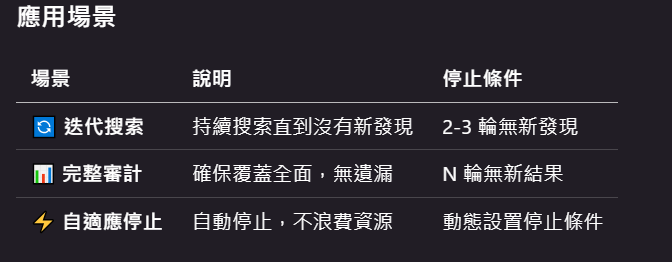
執行流程圖
輪次 1(3個Agent並行)→ 發現 A, B, C, D, E(5項新)→ dryRounds = 0
輪次 2(3個Agent並行)→ 發現 C, D, E, F, G(F, G 是新)→ dryRounds = 0
輪次 3(3個Agent並行)→ 發現 D, E, F(全是舊)→ dryRounds = 1
輪次 4(3個Agent並行)→ 發現 E, F(全是舊)→ dryRounds = 2

dryRounds = 2,停止
確認項目:A, B, C, D, E, F, G(7 項)
實現細節
class CompleteAuditWorkflow {
  constructor(agentList, dryThreshold = 2) {
    this.agents = agentList
    this.dryThreshold = dryThreshold
    this.seen = new Set()
    this.confirmed = []
    this.rounds = 0
    this.dryRounds = 0
  }

  getKey(item) {
    // 根據內容生成唯一 key
    return JSON.stringify(item)
  }

  async runRound() {
    this.rounds++

    // 並行執行所有 Agent
    const results = await Promise.all(
      this.agents.map(agent => agent.run())
    )

    // 扁平化並去重
    const allFound = results.flatMap(r => r.items || [])
    const fresh = allFound.filter(item => {
      const key = this.getKey(item)
      if (this.seen.has(key)) return false
      this.seen.add(key)
      return true
    })

    // 更新乾燥計數
    if (fresh.length === 0) {
      this.dryRounds++
    } else {
      this.dryRounds = 0
      this.confirmed.push(...fresh)
    }

    return {
      round: this.rounds,
      freshFound: fresh.length,
      totalConfirmed: this.confirmed.length,
      dryRounds: this.dryRounds,
      shouldStop: this.dryRounds >= this.dryThreshold
    }
  }

  async execute() {
    while (this.dryRounds < this.dryThreshold) {
      const status = await this.runRound()
      console.log(`輪次 ${status.round}:新增 ${status.freshFound} 項,累計 ${status.totalConfirmed} 項`)

      if (status.shouldStop) break
    }

    return {
      totalRounds: this.rounds,
      confirmedItems: this.confirmed,
      dryRoundsBeforeStop: this.dryRounds
    }
  }
}

// 使用範例
const audit = new CompleteAuditWorkflow([
  { run: () => agent1.audit() },
  { run: () => agent2.audit() },
  { run: () => agent3.audit() }
], 2)

const result = await audit.execute()
console.log(`審計完成:${result.totalRounds} 輪,發現 ${result.confirmedItems.length} 項`)
優化建議
智能乾燥檢測: 基於發現速度動態調整閾值
class SmartAuditWorkflow extends CompleteAuditWorkflow {
  calculateDryThreshold(discoveryRate) {
    // 發現速度越慢,閾值越低
    if (discoveryRate > 0.8) return 3      // 高效率:需要 3 輪確認
    if (discoveryRate > 0.5) return 2      // 中等效率:2 輪確認
    return 1                               // 低效率:1 輪確認即可
  }

  async runRound() {
    const status = await super.runRound()

    const rate = status.freshFound / this.agents.length
    this.dryThreshold = this.calculateDryThreshold(rate)

    return status
  }
}
並行度調整: 根據發現速度增減 Agent 數量
async runRound() {
  // 如果發現速度快,增加 Agent 數量
  if (this.discoveryRate > 0.7 && this.agents.length < MAX_AGENTS) {
    this.agents.push(await launchNewAgent())
  }

  // 如果沒有新發現,減少 Agent 數量節省資源
  if (this.dryRounds > 0 && this.agents.length > MIN_AGENTS) {
    this.agents.pop()
  }

  return super.runRound()
}
📊 模式對比矩陣
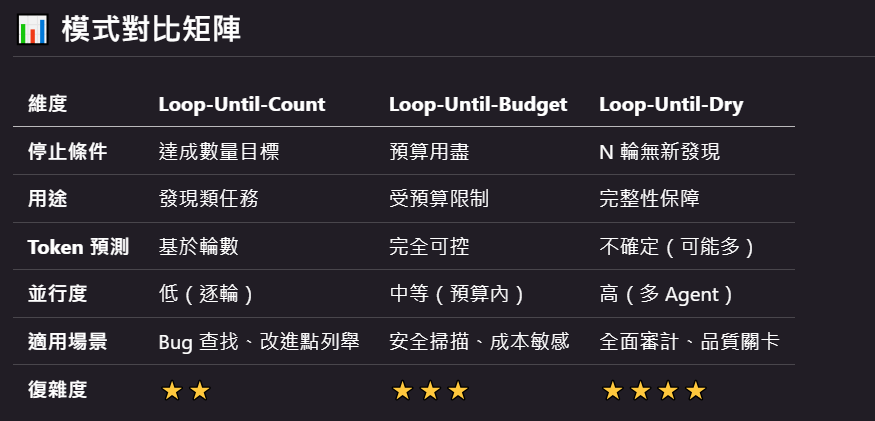
🎯 選擇決策樹
需要執行動態工作流
  │
  ├─ 知道目標數量?
  │  ├─ 是 → Loop-Until-Count
  │  │       (e.g., 找 10 個 bug)
  │  └─ 否 ↓
  │
  ├─ 有預算限制?
  │  ├─ 是 → Loop-Until-Budget
  │  │       (e.g., 用戶提供 500k Token)
  │  └─ 否 ↓
  │
  └─ 需要確保完整性?
     ├─ 是 → Loop-Until-Dry
     │       (e.g., 全面審計無遺漏)
     └─ 否 → 用 Static Workflow
             (流程固定)
💡 最佳實踐
1. 始終設置上限保護
// ❌ 危險:無限迴圈風險
while (true) { ... }

// ✅ 安全:設置多重保護
while (
  bugs.length < 10 &&
  rounds < MAX_ROUNDS &&
  budget.remaining() > MIN_RESERVE
) { ... }
2. 實時監控進度
const progress = {
  itemsFound: results.length,
  tokensUsed: 150_000,
  expectedTotal: 250_000,
  percentComplete: 60,
  estimatedRoundsLeft: 2
}

log(`進度:${progress.percentComplete}% | 預計還需 ${progress.estimatedRoundsLeft} 輪`)
3. 記錄決策日誌
const log = {
  timestamp: new Date(),
  round: 5,
  itemsDiscovered: 3,
  dryRoundsCount: 1,
  budgetRemaining: 120_000,
  decision: '繼續執行(新發現 > 0)'
}

auditLog.push(log)
最後更新: 2026年5月29日 相關文檔: 動態工作流執行案例研究